 BLK 471B YISHUN STREET 42 #01-02 SINGAPORE 762471
ADVANCED RESTORATIVE & COSMETIC DENTISTRY

Dental Veneers
Dental veneers are thin, custom-made shells bonded to the tooth surface to enhance their color, shape, or size. They offer a minimally invasive way to improve the appearance of teeth with minor aesthetic issues.
When Would I Need Dental Veneers?
Veneers are ideal for improving the look of teeth that need minimal reconstruction. They are commonly used to correct:
- Chipped or broken teeth
- Discolored or stained teeth resistant to whitening
- Gaps between teeth
- Crooked or misshapen teeth
Benefits of dental veneers
- Provide a natural tooth-like appearance
- Require less enamel removal compared to other restorations
- Easy to maintain with good oral hygiene
Types of dental veneers — which is better?
There are two main types of veneers: composite and porcelain. The choice depends on your needs, lifestyle, and budget.
Composite veneers
- Made and applied directly in the clinic, usually within one appointment
- Require minimal or no tooth shaving
- More affordable but less durable and more prone to staining
- Can be easily repaired if chipped
Porcelain veneers
- Created in a dental lab, requiring at least two appointments
- More durable and stain-resistant
- Mimic the natural translucency of real teeth for a more realistic look
- Must be replaced if chipped or broken
Procedure for Getting Dental Veneers
First appointment
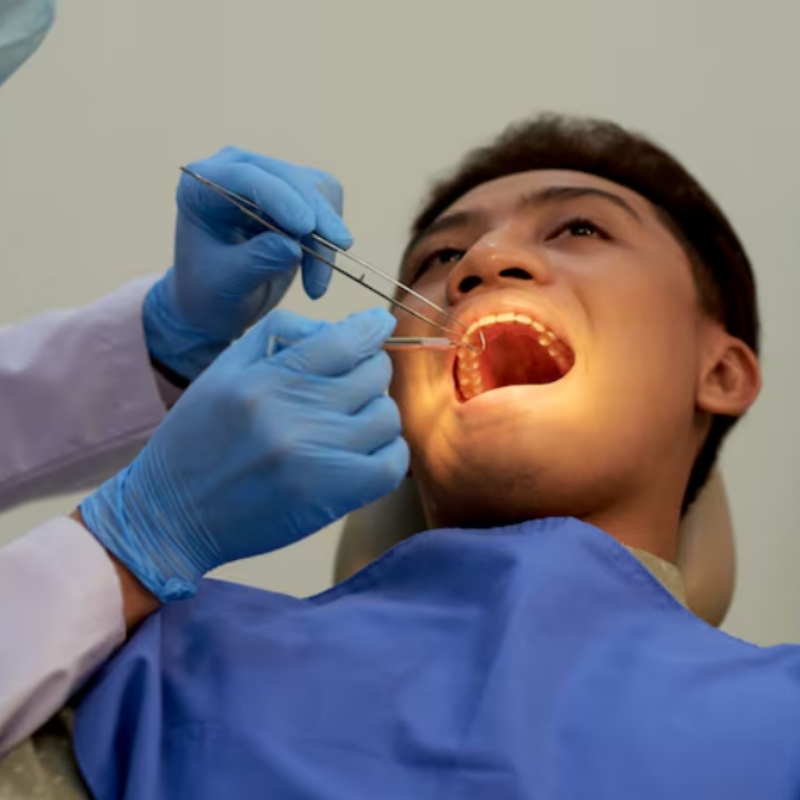
Your dentist will take X-rays to check your teeth and gums, then remove about 0.5 mm of enamel from the tooth surface. An impression is made for the veneer.
- For porcelain veneers: the mold is sent to a lab, and a temporary veneer is placed.
- For composite veneers: the permanent veneer is applied in the same visit.
Second appointment
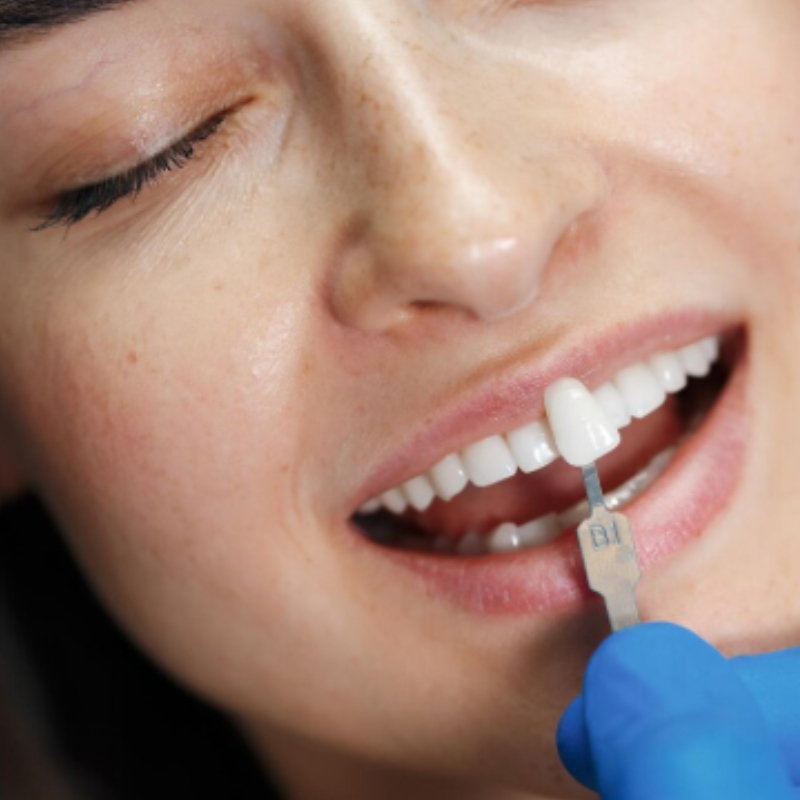
The temporary veneer (if any) is replaced with the permanent one. The dentist checks the color, fit, and comfort before bonding it permanently to the tooth. A follow-up visit may be scheduled to ensure proper adjustment.
Suitability for veneers
Veneers are best for aesthetic improvements and minor corrections. For teeth needing more extensive restoration, crowns or bridges may be more suitable. A detailed dental examination is essential to determine the best treatment for you.
Frequently Asked Question
Can I Use Both Composite and Porcelain Veneers to Fit My Budget?
Yes, it’s possible to combine both materials, but it’s generally not recommended. Since composite and porcelain veneers differ in texture and translucency, even matching colors may not create a uniform look. Composite veneers are also more prone to staining, which can make the contrast between the two more noticeable over time.
Do Veneers Last Forever?
No, veneers are not permanent. They experience normal wear and tear and will eventually need replacement. However, with good oral hygiene and proper care, veneers can last for many years.
Why Do I Experience Sensitivity After Veneer Treatment?
Some sensitivity to hot or cold food and drinks can occur because a thin layer of enamel is removed during the procedure. If you experience significant discomfort, it may be due to:
- A chipped veneer shell
- Tooth decay beneath the veneer
If you feel persistent or intense sensitivity, schedule a dental appointment promptly.
How Should I Care For My Veneers?
Veneers can last a long time with proper care. To prevent damage or dislodgement, avoid habits such as:
- Nail biting
- Chewing hard items like ice or pens
- Teeth grinding or clenching
Practicing good oral hygiene and visiting your dentist regularly will help keep your veneers in excellent condition.