 BLK 471B YISHUN STREET 42 #01-02 SINGAPORE 762471
ROUTINE & PREVENTIVE DENTAL CARE
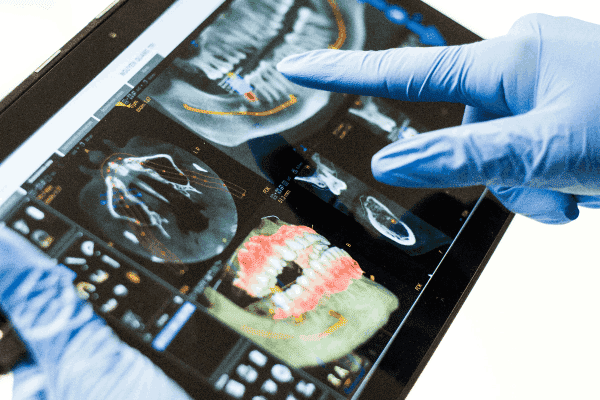
Dental X-Ray
X-rays are an essential diagnostic tool that help us make the most accurate assessment of your oral health. They allow us to detect any underlying issues before they develop into more serious problems in your mouth.
When Is Dental X-Ray Required
Dental X-rays are typically taken for the following reasons:
- To diagnose the cause of tooth sensitivity or pain
- To monitor and track the progression of dental diseases
- To detect cavities and decay
- To examine the bone structure and identify any abnormalities
- To locate hidden teeth, such as wisdom teeth
- To assess the development of teeth still forming in the jaw
- To evaluate teeth before or during procedures like root canal treatment
- To check the condition of previous dental work
- To analyze the relationship between the jawbone and teeth before orthodontic treatment
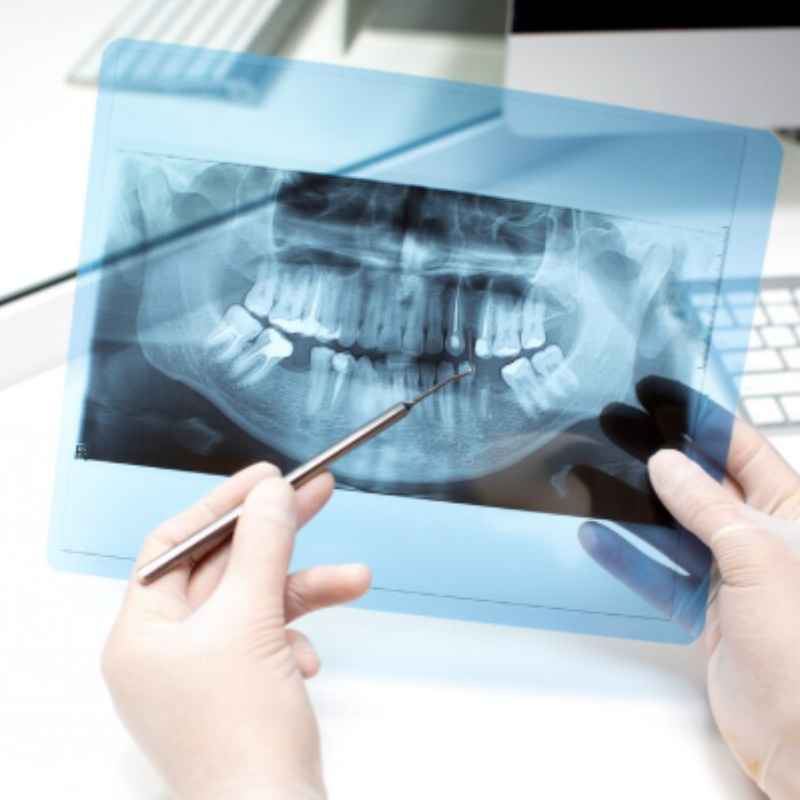
Understanding What Shows Up on Dental X-Rays
Dental X-rays provide detailed images that reveal aspects of your teeth, gums, and jawbone that are otherwise hidden from view. These images help identify issues like infections or abnormalities that may require treatment. Based on the findings, your dentist can develop an appropriate treatment plan, allowing you to make an informed decision about the next steps.
Dental Cavities
X-rays help detect early or hidden cavities and assess the condition of past fillings, allowing us to determine if further treatment is needed.
Wisdom Teeth
X-rays show the presence of wisdom teeth and the type of impaction, if any. If an impacted tooth is likely to cause problems, we can plan for its removal.
Abscess or Cyst
Infections or growths like abscesses or cysts can sometimes be discovered during routine dental X-rays, even if no symptoms are present. When symptoms do occur, X-rays provide the clarity needed to pinpoint the exact location and nature of the issue.
Our Radiography Facilities
At our clinic, we utilize advanced digital radiography equipment to capture the clearest diagnostic images with the lowest possible radiation exposure. We take every precaution, including the use of appropriate lead shields, and only perform X-rays when they are necessary to support your treatment and ensure your well-being.
Frequently Asked Question
How Often Should I Get a Dental X-Ray?
The frequency of dental X-rays depends on your individual oral health. If you have ongoing gum disease or are prone to cavities, you may need X-rays every six months or annually. For most healthy individuals, X-rays are typically recommended every two to three years.
Are Dental X-Rays Harmful To My Health?
Modern dental X-ray technology uses very low radiation levels, similar to the exposure from flying on an airplane, using a mobile phone, or from household electronics. While the radiation is minimal, we take safety seriously by following the ALARA principle, which stands for “As Low As Reasonably Achievable.” This ensures we use the lowest necessary dose of radiation and only take X-rays when they are essential for your treatment.
Can I Have a Dental X-ray If I’m Pregnant?
Yes, dental X-rays can be done during pregnancy, but only when absolutely necessary. They are generally safe, but we prefer to postpone them unless the benefits outweigh any potential risks. For example, an X-ray may be needed to assess deep decay causing pain or as part of a critical dental procedure that cannot be delayed until after the pregnancy.