Blk 471B Yishun Street 42, #01-02, Singapore 762471
A dental x ray in Yishun is a diagnostic imaging technique dentists use to detect oral health issues that cannot be seen during a standard visual examination. By capturing detailed images of teeth, roots, jawbones, and surrounding tissues, dental professionals can identify cavities, infections, bone loss, impacted teeth, and other underlying problems early.
In modern dental care, a dental x ray plays a crucial role in preventive dentistry. Without it, many conditions, such as hidden decay between teeth or infection beneath the gumline, can progress silently until they become painful or expensive to treat.
For patients living in northern Singapore, finding a reliable dental x ray means getting faster, more accurate diagnoses and personalised treatment plans. Clinics equipped with digital imaging technology can produce high-resolution scans within seconds while keeping radiation exposure extremely low.
If you’re exploring comprehensive dental services in Singapore, you can start by visiting the main clinic website at Ivory Dental to understand the full range of treatments available.
Why Dentists Recommend a Dental X Ray in Yishun
Dentists rely on imaging to confirm what the naked eye cannot detect. Even if your teeth look healthy, internal problems may already be developing.
A dental x ray in Yishun is commonly recommended to:
- Detect cavities between teeth
- Identify infections at the root of a tooth
- Examine bone density and gum disease
- Monitor wisdom teeth development
- Evaluate dental implants or orthodontic treatment
- Detect cysts or tumours in the jaw
Key Benefits of Dental X-Rays
| Benefit | Explanation |
|---|---|
| Early detection | Finds cavities and infections before symptoms appear |
| Precise diagnosis | Allows dentists to see roots, bone levels, and hidden structures |
| Treatment planning | Essential for orthodontics, implants, and root canal therapy |
| Preventive care | Helps prevent small issues from becoming serious problems |
In fact, a clinical review published by the American Dental Association suggests that radiographic exams significantly improve early detection of interproximal cavities and bone loss.
Types of Dental X Ray in Yishun Used in Modern Clinics
Not all dental X-rays are the same. Dentists choose different imaging types depending on the issue they are investigating. Each type of X-ray provides a unique view of the teeth, gums, and surrounding structures, allowing dentists to gather precise information for diagnosis and treatment planning.
1. Bitewing X-Ray
This is the most common dental x ray in Yishun for detecting cavities between teeth. Bitewing images focus on the crowns of the upper and lower teeth, capturing them in a single view. Because these areas are where plaque and food particles often accumulate, bitewing X-rays are particularly useful for identifying early signs of decay that may not yet be visible during a regular dental examination.
It shows:
- Upper and lower teeth simultaneously
- Early tooth decay
- Bone loss from gum disease
In addition, dentists often use bitewing X-rays during routine check-ups to monitor any changes in tooth structure or gum health over time. This allows them to track the progression of small cavities or detect early gum disease before it leads to more serious complications.
2. Periapical X-Ray
A periapical scan captures the entire tooth, from crown to root. Unlike bitewing X-rays, which focus mainly on the visible portion of the teeth, periapical images reveal the full structure of the tooth and the surrounding bone. This makes them especially valuable when a patient experiences pain or sensitivity that cannot be explained by a surface examination alone.
Dentists use it to diagnose:
- Root infections
- Abscesses
- Bone abnormalities
Periapical X-rays also help dentists evaluate the health of the tooth root and detect issues such as deep infections or fractures below the gumline. These images are often used when planning procedures like root canal therapy, where a detailed view of the tooth’s internal structure is essential.
3. Panoramic X-Ray
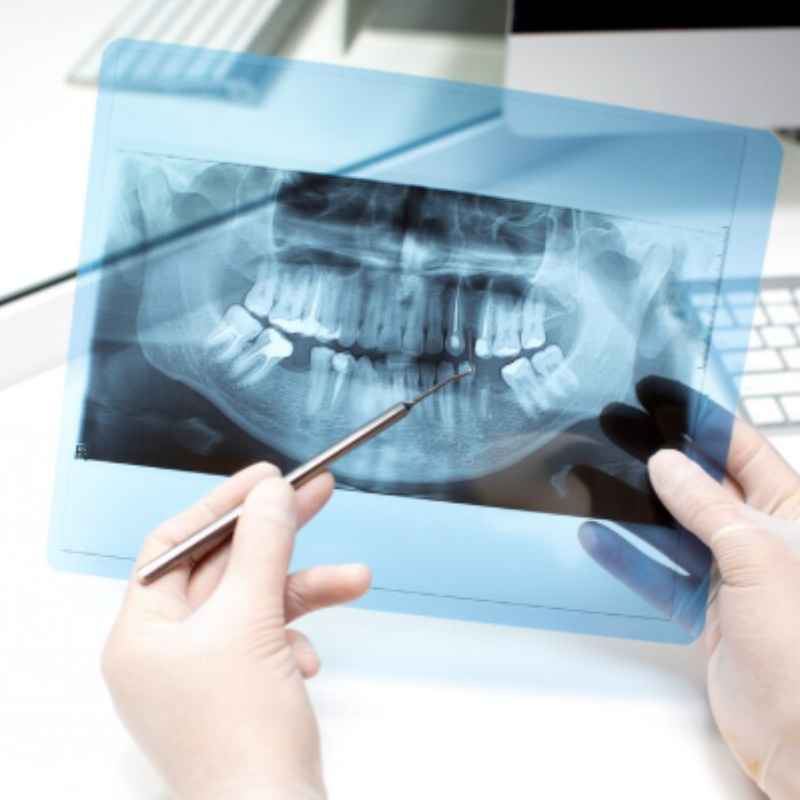
A panoramic dental X-ray captures the entire mouth in a single image. The machine rotates around the patient’s head to produce a wide-angle view of the teeth, jawbones, sinuses, and surrounding facial structures. This broader perspective allows dentists to assess overall oral health and identify issues that may not be visible in smaller, localized scans.
It helps evaluate:
- Wisdom teeth
- Jaw joints
- Impacted teeth
- Cysts or tumours
Panoramic imaging is commonly used for orthodontic planning, wisdom tooth evaluation, and assessing jaw alignment. Because it shows the entire dental structure at once, it helps dentists understand how different areas of the mouth relate to each other.
4. CBCT (3D Dental Scan)
Cone Beam CT provides a three-dimensional view of the mouth. Unlike traditional X-rays that produce flat images, CBCT scans generate highly detailed 3D images of teeth, bone, nerves, and soft tissues. This advanced technology allows dentists to examine complex dental structures from multiple angles.
Used for:
- Dental implants
- Complex root canal treatment
- Surgical planning
CBCT scans are particularly valuable for procedures that require precise measurements and careful planning. For example, when placing dental implants, dentists need to evaluate bone density and identify the exact position of nearby nerves. The detailed information from a 3D scan helps improve accuracy, safety, and long-term treatment success.
How a Dental X Ray in Yishun Works
The procedure is surprisingly quick and straightforward. Modern dental imaging technology allows dentists to capture highly detailed images of your teeth and surrounding structures within seconds, making the process efficient and comfortable for patients of all ages.
Step-by-Step Process:
1. Preparation
You’ll wear a protective lead apron to shield your body. This apron is designed to block unnecessary radiation exposure, ensuring that the procedure remains extremely safe. Dental X-rays use very low radiation levels, and with modern digital equipment, the exposure is even lower than in the past.
2. Positioning
The dentist positions a small sensor inside your mouth. This sensor acts as the digital film that captures the internal image of your teeth, gums, and jawbone. Proper positioning is important because it helps produce a clear and accurate image that the dentist can use to assess areas that are not visible during a standard oral examination.
3. Image Capture
The X-ray machine sends a brief burst of radiation. This step only takes a fraction of a second, and most patients barely notice when the image is taken. The radiation passes through your teeth and jaw, allowing dense structures like enamel and bone to appear clearly while highlighting potential concerns such as cavities or infections.
4. Digital Processing
The image appears instantly on a computer screen. Digital processing allows the dentist to enlarge, adjust contrast, or closely examine specific areas of the scan. This advanced imaging capability helps detect small issues early, which is why many clinics offering dental x ray in Yishun rely on digital systems to provide more accurate and efficient diagnoses.
5. Diagnosis
The dentist reviews the scan and explains the findings. By analyzing the X-ray images, the dentist can identify hidden dental problems such as cavities between teeth, bone loss, impacted teeth, or infections beneath the gums. After reviewing the results with you, the dentist will recommend the most appropriate treatment or preventive care plan to maintain your long-term oral health.
Is Dental X Ray in Yishun Safe?
Yes, modern digital imaging technology makes dental X-rays extremely safe.
Radiation Comparison
| Source | Radiation Dose |
|---|---|
| Dental X-Ray | 0.005 mSv |
| Chest X-Ray | 0.1 mSv |
| Natural Background Radiation (daily) | 0.01 mSv |
Digital imaging used in a dental x ray in Yishun emits up to 80–90% less radiation than traditional film X-rays.
For additional guidance on dental imaging safety, you can refer to information provided by the World Health Organization regarding radiation exposure in medical imaging.
Dentists also follow strict international safety protocols, including:
- Lead apron protection
- Thyroid collars
- Minimal exposure settings
- Only prescribing X-rays when clinically necessary
When You Might Need a Dental X Ray in Yishun
Dentists usually recommend imaging under certain conditions.
Common Situations
You may need a dental x ray in Yishun if:
- You experience persistent tooth pain
- Your dentist suspects hidden decay
- You have gum disease symptoms
- Wisdom teeth are developing
- You’re planning orthodontic treatment
- You’re considering dental implants
Children may require more frequent imaging because their teeth and jawbones are still developing.
Real Case Example: Early Detection Saves a Tooth
A patient in Yishun visited a clinic with mild sensitivity but no visible cavity.
After performing a dental x ray in Yishun, the dentist discovered decay developing between two molars, an area impossible to inspect visually.
Because the issue was detected early:
- The patient only required a simple filling
- Root canal treatment was avoided
- The tooth structure remained intact
This case highlights why diagnostic imaging is essential for preventive dental care.
Dental X Ray in Yishun and Preventive Dentistry
Preventive dentistry focuses on identifying problems before they become severe.
A dental x ray in Yishun supports preventive care by:
- Monitoring oral health over time
- Detecting bone loss from gum disease
- Tracking wisdom tooth growth
- Identifying infections early
Many dentists recommend periodic imaging every 12–24 months, depending on individual risk factors.
Pro Tip: Patients with frequent cavities or gum disease may require X-rays more often to monitor changes and prevent complications.
Conclusion: Where to Get a Trusted Dental X Ray in Yishun
A dental x ray in Yishun is one of the most valuable tools in modern dentistry. It helps detect hidden decay, diagnose infections, and guide precise treatment plans long before symptoms appear.
With digital technology, the procedure is fast, safe, and highly accurate, making it a critical part of preventive dental care.
If you’re considering diagnostic imaging or want a professional evaluation, you can explore the dedicated service page for Dental X-Ray in Yishun to understand how the procedure works and when it may be recommended.
At the same time, experienced dental professionals at Ivory Dental combine modern imaging technology with preventive dentistry expertise to ensure patients receive accurate diagnoses and personalised care.
Pro Tip: If it’s been more than a year since your last dental exam, scheduling a consultation that includes a dental x ray in Yishun can help detect issues early, saving time, cost, and discomfort in the long run.
FAQs (Frequently Asked Questions)
How often should I get a dental x ray in Yishun?
Most adults are advised to get a dental x ray in Yishun every one to two years to monitor hidden dental problems such as cavities or bone loss. However, patients with higher risks, such as frequent cavities or gum disease, may need a dental x ray more often so dentists can track changes and treat issues early.
Does a dental x ray in Yishun hurt?
No, the procedure is completely painless and non-invasive. During a dental x ray in Yishun, the dentist or dental assistant simply places a small digital sensor or film inside your mouth while the imaging machine captures the picture. You may feel slight pressure from biting down on the sensor, but it usually lasts only a few seconds. Because the process is quick and comfortable, many patients find that getting a dental x ray in Yishun is easier than they expected
Can children safely undergo dental X-rays?
Yes, dental X-rays are considered very safe for children when performed by trained professionals. Modern digital imaging technology used for a dental x ray in Yishun produces extremely low levels of radiation, and dentists also provide protective measures such as lead aprons and thyroid collars to keep exposure minimal.
How long does a dental x ray appointment take?
A standard dental x ray is a quick procedure that typically takes between 5 and 10 minutes to complete. Digital imaging systems allow dentists to capture and display images almost instantly, so the results can often be reviewed during the same appointment.
Do I need an X-ray for every dental visit?
Not necessarily. Dentists usually recommend a dental x ray only when it provides important diagnostic information, such as detecting hidden cavities, evaluating bone levels, or monitoring ongoing dental treatments