Blk 471B Yishun Street 42, #01-02, Singapore 762471
The types of braces available today give patients more choices than the traditional metal brackets many people remember from childhood. Depending on your teeth, bite, lifestyle, and treatment goals, orthodontic treatment may involve metal braces, ceramic braces, self-ligating braces, lingual braces, or clear aligners.
The right option is not simply the one that looks best. An orthodontist needs to consider how much tooth movement is required, whether your bite needs correction, your oral health, and how consistently you can follow the treatment plan.
What Are the Main Types of Braces?
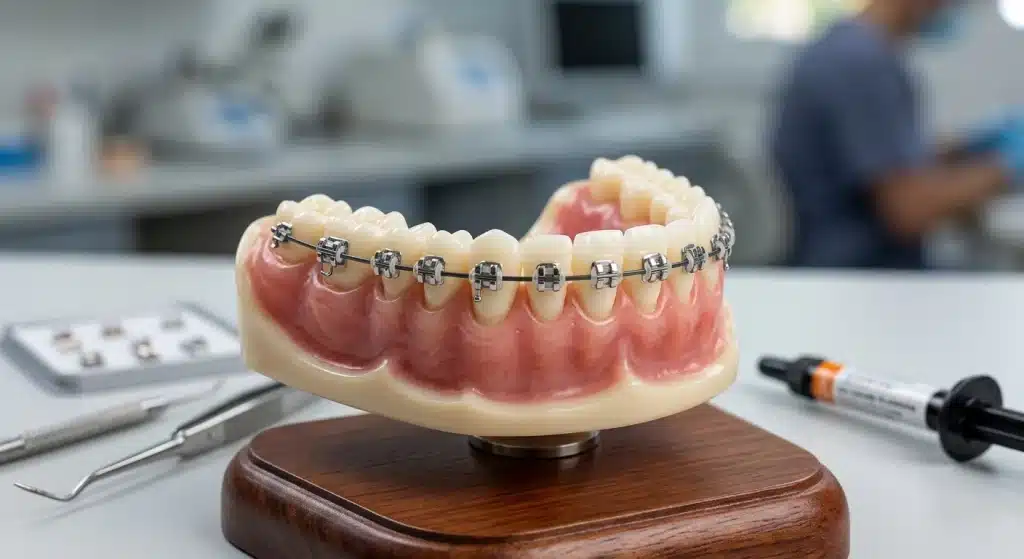
The main types of braces differ in how they attach to the teeth, how visible they are, and how they apply force to move teeth. While all aim to improve tooth alignment and, where necessary, bite function, their suitability varies from patient to patient.
The most common options include:
- Traditional metal braces
- Ceramic braces
- Self-ligating braces
- Lingual braces
- Clear aligners
Traditional Metal Braces
Traditional metal braces use metal brackets attached to the front surfaces of the teeth and connected by orthodontic wires. The wires apply controlled pressure that gradually moves teeth into planned positions.
They remain one of the most established orthodontic options and can be used for a wide range of alignment and bite problems. They are also generally easy for the orthodontist to monitor and adjust throughout treatment.
Ceramic Braces
Ceramic braces work in a similar way to conventional metal braces, but the brackets are made from tooth-coloured or clear ceramic materials. This makes them less noticeable when you smile.
They may appeal to teenagers and adults who want fixed braces without the appearance of conventional metal brackets. However, ceramic brackets can require additional care because some foods and drinks may stain certain components.
Self-Ligating Braces
Self-ligating braces use brackets with built-in mechanisms to hold the orthodontic wire instead of relying on traditional elastic ligatures.
The design can make certain adjustment appointments more straightforward, but self-ligating braces should not automatically be considered faster or better for every patient. Treatment time still depends largely on the individual’s orthodontic problem and the movements required.
Lingual Braces
Lingual braces are attached to the back surfaces of the teeth, making them much less visible from the front. They can provide a discreet fixed-brace option for patients who prefer not to have brackets displayed on the front of their teeth.
Because the brackets are positioned behind the teeth, however, lingual treatment can require specialised planning and may take some time to get used to.
Clear Aligners
Clear aligners use a series of removable, transparent trays to gradually move the teeth. Each aligner is designed to make small changes, with the patient progressing through the series according to the treatment plan.
One major difference from fixed braces is that aligners can be removed for eating, brushing, and flossing. However, this also means treatment depends heavily on patient compliance. If aligners are not worn as instructed, progress can be affected.
How Do the Different Types of Braces Compare?
There is no single type of braces that is suitable for everyone. The following comparison gives a general overview of the main differences.
| Type | Appearance | Removable? | Common consideration |
|---|---|---|---|
| Metal braces | Highly visible | No | Versatile for many orthodontic problems |
| Ceramic braces | Less noticeable | No | Aesthetic appearance |
| Self-ligating braces | Similar to conventional fixed braces | No | Different bracket mechanism |
| Lingual braces | Mostly hidden | No | Requires specialised placement |
| Clear aligners | Nearly invisible | Yes | Requires consistent wear |
These differences are useful when comparing your options, but they should not replace a professional orthodontic assessment.
How Do You Choose Between Different Types of Braces?
The most appropriate orthodontic treatment depends on your dental condition as well as your personal preferences. A consultation allows the dentist or orthodontist to assess your teeth, bite, jaw relationship, gum health, and treatment goals.
Important factors include:
- Severity of alignment problems: More complex cases may require fixed appliances or other specialised approaches.
- Bite correction: Overbites, underbites, crossbites, and other bite problems may affect which treatment is appropriate.
- Appearance: Adults may prefer ceramic braces, lingual braces, or clear aligners for a more discreet appearance.
- Lifestyle: Patients who travel frequently or play contact sports may have different practical considerations.
- Compliance: Removable aligners require consistent wear according to the treatment plan.
- Oral hygiene: All orthodontic appliances require good cleaning habits to reduce the risk of tooth decay and gum problems.
In our experience, patients often begin by choosing based on appearance but discover during consultation that the condition of their bite and the amount of tooth movement required are more important factors.
Do Different Types of Braces Take Different Amounts of Time?
Treatment duration varies from patient to patient, and the appliance alone does not determine how quickly treatment will finish. The complexity of tooth movement, bite correction, patient compliance, and biological response all contribute to the timeline.
For many patients, comprehensive orthodontic treatment takes around 12 to 24 months, although some mild cases may be shorter and more complex cases can take longer. The American Association of Orthodontists explains that treatment duration varies according to the individual’s orthodontic needs.
If you want to understand the typical stages and factors that affect your personal timeline, read our guide on how long do braces take.
What Happens Before Braces Are Fitted?
Choosing from the different types of braces normally starts with an assessment rather than immediately fitting an appliance.
A typical orthodontic consultation may involve:
- Dental examination: Your dentist checks your teeth, gums, bite, and overall oral health.
- Diagnostic records: Dental X-rays, photographs, scans, or measurements may be taken where appropriate.
- Problem identification: The orthodontic team determines whether the main concern involves crowding, spacing, bite alignment, or another issue.
- Treatment planning: Different appliance options are considered based on the required tooth movements.
- Discussion: Your dentist explains the expected treatment duration, care requirements, and practical considerations.
- Treatment preparation: Existing dental problems may need to be addressed before orthodontic treatment begins.
This preparation is important because braces should not be viewed as a purely cosmetic treatment. Correcting the bite and maintaining healthy teeth and gums are also important parts of orthodontic care.
A Simple Example: Why the Same Braces May Not Suit Everyone
Imagine two adults who both want straighter teeth. The first has mild spacing between the front teeth and an otherwise healthy bite. They may have several treatment options, including clear aligners or discreet fixed braces, depending on the assessment.
The second has significant crowding combined with a complex bite problem. Their treatment may require more controlled tooth movement, making a fixed orthodontic appliance more appropriate.
Although both patients have the same goal, their treatment plans can be very different. This is why comparing the types of braces should always include both clinical suitability and personal preference.
How Do You Look After Braces During Treatment?
Good oral hygiene becomes particularly important when brackets and wires are attached to the teeth. Food can become trapped around orthodontic components, making thorough brushing and cleaning more difficult.
During treatment, patients should:
- Brush carefully around brackets and along the gumline.
- Clean between teeth using floss or appropriate interdental cleaning tools.
- Attend scheduled orthodontic appointments.
- Avoid hard or sticky foods that can damage brackets or wires.
- Follow instructions about elastics or other orthodontic appliances.
- Tell the dental team if a bracket becomes loose or a wire breaks.
Regular dental care should also continue throughout orthodontic treatment rather than waiting until the braces are removed.
Conclusion: Which Types of Braces Should You Choose?

The types of braces available today provide patients with several ways to improve tooth alignment and bite function. Metal, ceramic, self-ligating, and lingual braces are fixed options, while clear aligners provide a removable alternative. Each has different practical and aesthetic considerations.
At Ivory Dental, orthodontic treatment can be planned around your individual dental condition, treatment goals, and lifestyle. Rather than choosing an appliance based only on appearance, a professional assessment can help determine which orthodontic approach is appropriate for your teeth and bite.
If you are considering braces and want to understand your treatment options, visit Ivory Dental to learn more about orthodontic care and arrange a consultation.
Frequently Asked Questions About Types of Braces
What are the different types of braces?
The main options include traditional metal braces, ceramic braces, self-ligating braces, lingual braces, and clear aligners. Each has different advantages, limitations, appearance, and treatment requirements.
Which type of braces is the least noticeable?
Lingual braces are attached to the back of the teeth, while ceramic braces and clear aligners are designed to be less noticeable from the front. The most suitable discreet option depends on your orthodontic needs.
Are clear aligners better than traditional braces?
Clear aligners are not automatically better than traditional braces. They offer advantages such as removability and a discreet appearance, but they require consistent wear and may not be appropriate for every type of tooth movement.
Which braces work fastest?
There is no single type of braces that can be considered the fastest for every patient. Treatment speed depends on the complexity of the case, required tooth movements, compliance, and individual biological response.
Are ceramic braces as effective as metal braces?
Ceramic braces use the same basic principle of applying controlled forces to move teeth and can be effective for many orthodontic cases. However, the suitability of ceramic brackets depends on the patient’s specific treatment requirements.