Blk 471B Yishun Street 42, #01-02, Singapore 762471

Uncomfortable dentures can cause sore gums, difficulty chewing, slipping, and irritation when speaking. The right uncomfortable dentures solutions depend on what is causing the problem, whether the dentures are new, worn, damaged, or no longer fit the shape of your gums. Some issues improve with small adjustments, while others may require a denture reline, repair, or replacement.
Why Do Dentures Become Uncomfortable?
Uncomfortable dentures solutions depend on identifying why the appliance causes pain, irritation, or movement. Some uncomfortable dentures solutions involve simple adjustments, while others may require relining, repair, or a completely new denture. Understanding the cause helps patients choose a treatment that improves comfort without damaging the appliance.
Common causes include:
- Poor fit: The denture may be too tight, too loose, or unevenly supported by the gums.
- Gum irritation: Repeated rubbing or pressure can create sore spots and ulcers.
- Changes in the jawbone: The shape of the supporting tissues can gradually change after tooth loss, affecting denture stability.
- Damaged dentures: Cracks, worn surfaces, or broken denture teeth can affect comfort and function.
- Bite problems: Uneven contact between upper and lower dentures can cause pressure in certain areas.
- Dry mouth: Reduced saliva can make dentures feel less comfortable and affect their natural retention.
Identifying the cause is important because applying more denture adhesive or trying to tolerate the discomfort may not address the underlying issue.
What Are the Best Solutions for Uncomfortable Dentures?
Finding suitable uncomfortable dentures solutions starts with a dental examination. The most effective uncomfortable dentures solutions depend on whether the problem comes from poor fit, gum irritation, damaged materials, or changes in the jawbone. A dentist can assess these factors before recommending the appropriate treatment.
1. Denture Adjustment
A denture adjustment involves modifying specific areas of the appliance that create excessive pressure or rub against the gums. This may help when a new denture causes localised soreness or when the bite feels uneven.
The dentist checks how the denture sits and identifies areas that need correction. Avoid filing, trimming, or bending the denture at home, as even a small change can affect its fit and stability.
2. Denture Relining
Denture relining involves adding or modifying material on the inner surface of the denture so it fits the current shape of the gums more closely. It may be suitable when the denture is generally in good condition but has become loose because the supporting tissues have changed.
A reline does not necessarily correct every problem. If the denture is badly worn, damaged, or has an unsuitable bite, a different treatment may be more appropriate.
3. Denture Repair or Replacement
A cracked or broken denture should be assessed by a dentist. Depending on the damage, it may be possible to repair the appliance. However, replacement may be recommended if the denture is significantly worn, unstable, or no longer suitable for the patient’s mouth.
4. Denture Adhesives
Denture adhesives come in creams, powders, strips, and pads. When used as directed, they can provide additional retention for dentures that already fit reasonably well.
However, adhesives should not be used to compensate for a denture that consistently slips, causes pain, or requires increasingly large amounts of product. The US Food and Drug Administration explains that adhesives can offer temporary relief from looseness, but poorly fitting dentures may need relining or replacement.
What Can You Do at Home to Make Dentures More Comfortable?
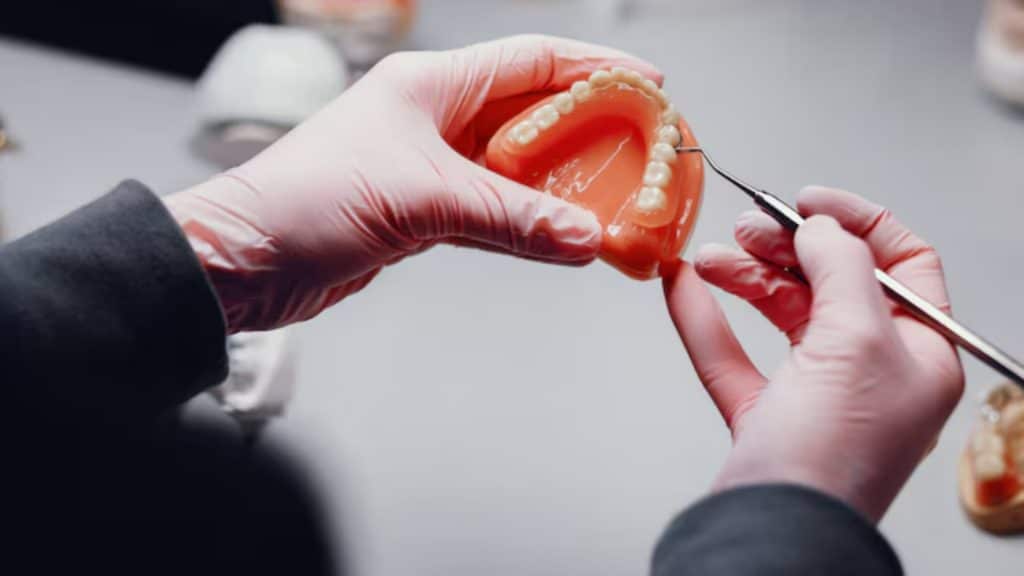
Some uncomfortable dentures solutions involve simple daily care habits that help reduce irritation and maintain oral hygiene. However, home-based uncomfortable dentures solutions cannot correct a denture that is poorly fitted or damaged. Persistent discomfort should always be assessed by a dentist.
In the meantime, these habits may help:
- Clean your dentures daily. Rinse away food particles and gently brush all surfaces with a soft denture brush and a suitable non-abrasive cleanser.
- Clean your mouth as well. Gently brush your gums, tongue, and the roof of your mouth to remove plaque and food debris.
- Remove dentures before sleeping. Unless your dentist gives different instructions, take them out at night to allow your oral tissues to rest.
- Keep dentures moist when removed. Store them in water or an appropriate denture-soaking solution, following the manufacturer’s instructions.
- Eat carefully while adjusting. Choose softer foods, cut meals into smaller pieces, and chew slowly on both sides of the mouth.
The American Dental Association advises cleaning dentures daily and keeping them in water or a suitable cleanser when they are not being worn. Hot water should be avoided because it can distort the denture’s shape. American Dental Association
Denture Adjustment vs Relining vs Replacement
Choosing between different uncomfortable dentures solutions depends on the condition of the appliance and the supporting gum tissues. Some uncomfortable dentures solutions focus on improving the existing denture, while others involve repairing or replacing it. A dental assessment helps determine which option is appropriate.
| Treatment | What it addresses | When it may be considered |
|---|---|---|
| Denture adjustment | Localised pressure or uneven contact | A denture rubs against a particular area or causes an uneven bite |
| Denture relining | Changes in the shape of the supporting gums | The denture is in reasonable condition but has become loose |
| Denture repair | Cracks, fractures, or damaged components | The appliance has sustained damage that may be repairable |
| Denture replacement | Extensive wear or an unsuitable overall fit | Adjustments or relining are no longer sufficient |
A loose denture does not automatically need replacing. In some cases, relining may improve its fit. However, a dentist needs to assess the appliance before recommending treatment.
When Should You See a Dentist About Denture Discomfort?
Knowing when to seek uncomfortable dentures solutions can prevent minor irritation from becoming a more persistent problem. If your dentures cause repeated pain, slipping, or difficulty chewing, professional uncomfortable dentures solutions may be necessary. A dentist can identify the cause and recommend suitable treatment.
Look out for these signs:
- Pain or ulcers that do not improve.
- Red, swollen, or bleeding gum tissue.
- Dentures that click, rock, or slip while talking.
- Difficulty chewing because the dentures feel unstable.
- Cracks, broken teeth, or visible damage to the appliance.
- A noticeable change in how your dentures fit.
Ivory Dental advises patients to inform their dentist if pain or ulcers persist beyond two to three days after receiving new dentures. Do not wait for that period if the pain is severe, there is significant swelling, or you have other concerning symptoms.
An Example: Why Denture Fit Should Be Checked Regularly
Consider someone who has worn the same complete dentures comfortably for several years but gradually notices that the lower denture moves when eating. They begin using more adhesive to keep it in place, yet food still gets trapped underneath and the gums become sore.
In this situation, simply applying more adhesive may not solve the problem. A dental examination can help determine whether changes in the jaw and gum tissues have affected the fit. If the denture is still in good condition, relining may be considered. If it is significantly worn or unsuitable, replacement may be discussed.
This is an illustrative example, not an actual patient case. It highlights why recurring discomfort deserves a proper assessment.
Can New Dentures Feel Uncomfortable at First?

Yes. New dentures can feel bulky or unfamiliar while the tongue, cheeks, and gums adjust to the appliance. Some people also experience increased saliva, mild soreness, or temporary difficulty speaking clearly.
The adjustment period can take several weeks, and follow-up appointments may be needed to address pressure points. However, persistent pain, ulcers, or difficulty keeping the dentures in place should be checked rather than dismissed as normal adjustment.
If you are considering a new set of full dentures in Yishun, a dentist can assess your oral condition and explain the fitting and adjustment process.
Why Is Denture Care Important in Singapore?
Tooth loss remains a relevant oral health concern among older adults in Singapore. According to the Ministry of Health, complete edentulism affects approximately 13% of people above 60 years old, compared with less than 3% of the overall population. These figures were provided in a parliamentary answer on 7 May 2024.
For people who depend on dentures, regular dental reviews help identify changes in fit, gum irritation, and damage before these problems interfere further with everyday activities.
Find Suitable Uncomfortable Dentures Solutions at Ivory Dental
Finding the right uncomfortable dentures solutions can make everyday activities such as eating, speaking, and smiling more comfortable. At Ivory Dental, patients can discuss uncomfortable dentures solutions based on their denture condition, gum health, and individual needs. The dentist can assess whether an adjustment, reline, repair, or replacement is appropriate.
Ivory Dental provides denture services in Singapore, including assessment and care for patients adapting to removable dentures. If your dentures feel loose, painful, or uncomfortable, arrange a consultation to discuss suitable treatment options.
Visit Ivory Dental to learn more or explore its denture services and find out how the clinic can help you maintain a more comfortable fit.
Frequently Asked Questions
How can I stop my dentures from hurting?
Avoid wearing a denture that causes persistent pain without having it checked. A dentist can identify pressure points and determine whether an adjustment, reline, or replacement is needed.
Why do my dentures suddenly feel loose?
Changes in the gums and jawbone after tooth loss can affect how dentures fit. Wear and damage may also contribute to looseness. A dentist can check whether relining or replacement is appropriate.
Can I use denture adhesive every day?
Denture adhesive can provide additional retention when used according to its instructions. However, it should not replace professional treatment for poorly fitting dentures. If you need increasingly large amounts to keep your dentures in place, arrange a dental assessment.
How long does it take to get used to new dentures?
Adjustment varies between individuals, but it can take several weeks to become comfortable with new dentures. Mild soreness and speech changes may occur initially. Persistent pain or ulcers should be reported to your dentist.
Should I sleep with my dentures in?
Most denture wearers should remove their dentures before sleeping to allow the gums to rest. Follow your dentist’s instructions if your individual treatment requires a different approach.