Blk 471B Yishun Street 42, #01-02, Singapore 762471

Dental implants vs dentures is a common comparison for people exploring ways to replace missing teeth. Dental implants are artificial tooth roots placed in the jawbone to support replacement teeth, while dentures are removable appliances designed to replace some or all missing teeth. Both options can restore chewing function, improve speech, and support the appearance of a smile, but they differ in stability, maintenance, treatment time, and suitability.
Choosing between dental implants and dentures depends on several factors, including oral health, jawbone condition, the number of missing teeth, personal preferences, and long-term maintenance needs. Understanding these differences can help patients have a more informed conversation with their dentist and choose a solution that fits their circumstances.
What Are Dental Implants?
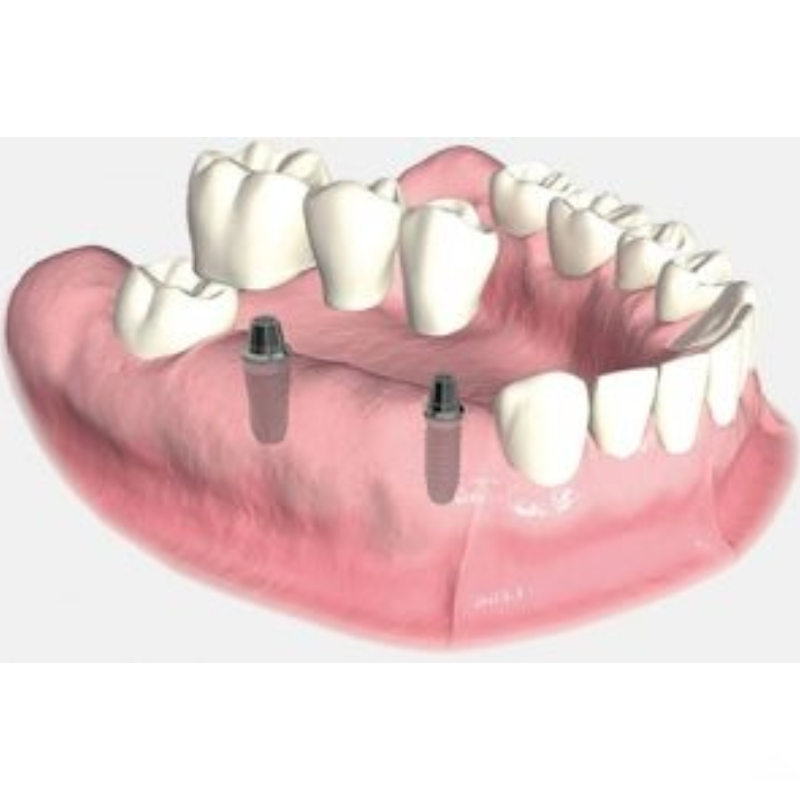
Dental implants are small posts, commonly made from titanium or other biocompatible materials, that are placed in the jawbone to act as artificial tooth roots. After healing, an implant can support a crown, bridge, or denture, depending on the treatment plan.
One reason patients consider implants is their stability. Because the implant integrates with the surrounding bone through a process called osseointegration, it can provide a secure foundation for replacement teeth.
Benefits of Dental Implants
Dental implants offer several potential advantages:
- Stable tooth replacement: Implants are anchored in the jawbone rather than resting directly on the gums.
- Natural-looking results: The visible replacement teeth can be designed to complement the surrounding teeth.
- Chewing support: A well-planned implant restoration can help restore chewing function.
- Support for jawbone health: Implant placement can help limit bone loss in the area of a missing tooth, although outcomes vary.
- No routine removal: Most implant-supported crowns and bridges remain in place during daily activities and are cleaned in the mouth.
Dental implants do require surgery, adequate healing, and ongoing professional care. They are not suitable for every patient, and factors such as gum disease, bone availability, smoking, certain medical conditions, and oral hygiene can affect treatment planning and outcomes.
What Are Dentures?
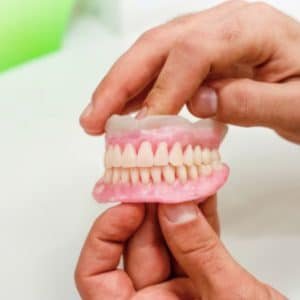
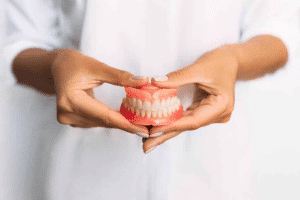
Dentures are removable dental appliances that replace missing teeth and the surrounding structures. They can replace several teeth or an entire arch, depending on a person’s needs.
There are two common types of dentures:
- Partial dentures: Replace some missing teeth while working around remaining natural teeth.
- Complete dentures: Replace all teeth in the upper jaw, lower jaw, or both.
Conventional dentures rest on the gums and rely on their fit, shape, and supporting structures to stay in position. Some may use clasps or other components to improve retention. Implant-supported dentures are another option, combining implants with a removable or fixed prosthesis according to the design.
Benefits of Dentures
Dentures can be a practical tooth replacement option for many patients.
- Non-surgical option: Conventional dentures generally do not require implant surgery.
- Flexible treatment planning: They can replace multiple missing teeth or a complete set of teeth.
- Potentially shorter initial treatment: Dentures may be provided without waiting for an implant to integrate with the jawbone, although extractions and healing can still affect timing.
- Removable for cleaning: Conventional dentures can be taken out for daily cleaning.
- Suitable for a wider range of circumstances: They may be considered when implant surgery is not appropriate or is not the patient’s preferred option.
Dentures may need adjustments as the mouth changes over time. Some patients also experience movement, sore spots, or difficulty adapting to speaking and eating, particularly during the initial adjustment period.
Dental Implants vs Dentures: Key Differences
When comparing dental implants vs dentures, it helps to look beyond appearance and consider how each option works in everyday life.
| Feature | Dental Implants | Conventional Dentures |
|---|---|---|
| How they work | Anchored in the jawbone | Rest on the gums; partial dentures may use supporting teeth |
| Removability | Implant crowns and bridges usually stay in place | Removed for cleaning |
| Stability | Generally offers strong stability when treatment succeeds | Stability depends on fit, anatomy, and denture design |
| Treatment process | Requires surgery and healing | Usually does not require implant surgery |
| Treatment timeline | May take several months or longer | Often can be completed sooner, depending on clinical needs |
| Jawbone considerations | Can help maintain bone in the implant area | Does not provide the same direct stimulation to the jawbone |
| Daily care | Brushing, interdental cleaning, and professional reviews | Cleaning the appliance and gums, plus regular dental reviews |
| Adjustments | Repairs or maintenance may be needed | Relining, adjustment, or replacement may be needed |
| Initial cost | Generally higher | Often lower for conventional dentures |
| Suitability | Depends on bone, gum health, medical history, and other factors | Depends on oral anatomy, remaining teeth, and the type of denture |
Neither option is automatically better for everyone. The right choice depends on individual clinical findings, treatment goals, budget, and willingness to maintain the replacement teeth.
Which Option Is More Comfortable for Eating and Speaking?
Comfort is an important consideration when choosing between dental implants and dentures.
Eating With Dental Implants
Implant-supported replacement teeth are anchored securely, which can make chewing feel more stable. Patients may find it easier to manage a wider range of foods once healing is complete and their dentist has confirmed that the restoration is ready for normal use.
However, implants do not guarantee that every food will feel exactly as it did with natural teeth. Comfort depends on the condition of the restoration, bite alignment, surrounding tissues, and overall oral health.
Eating With Dentures
Conventional dentures can restore useful chewing function, but patients may need time to adapt. Certain foods may be more difficult to manage, particularly if a lower denture moves during eating or the appliance does not fit properly.
A dentist can adjust the fit and provide practical advice on adapting to dentures. Persistent soreness or movement should be assessed rather than ignored.
Speaking With Both Options
Both dental implants and dentures can improve speech when missing teeth affect pronunciation. Dentures may initially feel unfamiliar and can temporarily change how certain sounds are produced. Implant-supported teeth can feel more stable, although speech outcomes still depend on the design and position of the replacement teeth.
Dental Implants vs Dentures: Cost and Long-Term Value
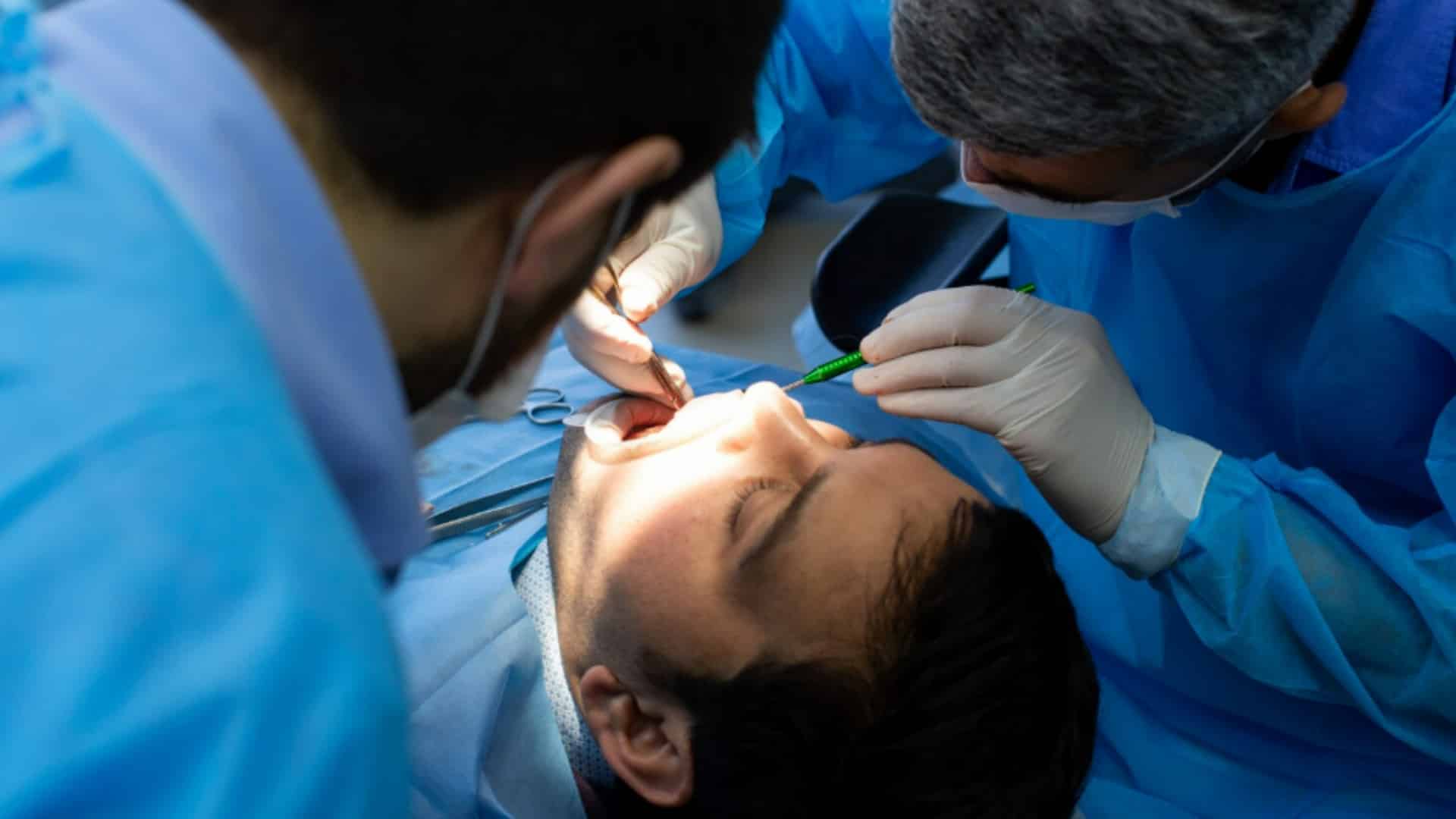
Cost is often a deciding factor when comparing dental implants vs dentures. Conventional dentures generally have a lower initial cost, while implants usually involve a greater upfront investment because they require surgery, components, and a restoration.
However, the initial price is only one part of the decision.
Factors That Affect the Total Cost
The overall cost of either treatment can depend on:
- The number of teeth being replaced.
- Whether a partial denture, complete denture, single implant, or implant-supported restoration is needed.
- The condition of the gums and jawbone.
- Whether extractions, bone grafting, or other preparatory procedures are required.
- The materials and design of the replacement teeth.
- Future maintenance, repairs, adjustments, and replacement needs.
A conventional denture may require relining or replacement as the gums and jawbone change. Dental implants may also require maintenance or repair, and implant treatment can involve additional costs if complications occur.
For this reason, ask your dentist for a treatment plan that explains the expected initial costs, possible additional procedures, follow-up schedule, and long-term maintenance requirements. Comparing these details provides a more useful picture than looking at the starting price alone.
Who Is a Suitable Candidate for Dental Implants or Dentures?
The best tooth replacement option depends on a clinical examination rather than age or preference alone.
When Dental Implants May Be Considered
A dentist may consider dental implants when a patient:
- Has one or more missing teeth.
- Has healthy gums or can receive appropriate gum treatment.
- Has sufficient jawbone, or may benefit from bone grafting.
- Can maintain consistent oral hygiene.
- Is able to undergo the necessary surgical and healing process.
Some medical conditions and medications may affect healing or implant success. A dentist should review the patient’s medical history and relevant risk factors before recommending treatment.
When Dentures May Be Considered
Dentures may be considered when a patient:
- Needs to replace several or all missing teeth.
- Prefers a removable option.
- Wants to avoid implant surgery.
- Has anatomical or medical factors that make implants less suitable.
- Is looking for a replacement option with a lower initial cost.
Dentures also require a suitable fit and regular dental care. They are not a maintenance-free solution, and the mouth may change enough over time to require adjustments.
Can You Combine Dental Implants and Dentures?
Yes. Implant-supported dentures combine dental implants with a denture to improve retention and stability. Depending on the design, the denture may be removable by the patient or fixed in place.
This approach can be useful for some people who need to replace many missing teeth but want more stability than conventional dentures provide. However, it involves implant surgery and additional planning, so a dentist must assess whether it is appropriate.
How to Choose Between Dental Implants and Dentures
If you are unsure which option is right for you, use these steps to prepare for a dental consultation.
- Identify your tooth replacement needs. Consider whether you are replacing one tooth, several teeth, or a complete arch.
- Arrange a dental examination. Your dentist can assess your gums, remaining teeth, bite, and jawbone. X-rays or other imaging may be recommended when clinically necessary.
- Discuss treatment options. Ask about conventional dentures, implant-supported restorations, and any alternatives suitable for your situation.
- Compare costs and timelines. Understand the initial fees, possible preparatory treatment, healing time, and expected maintenance.
- Review daily care requirements. Choose an option whose cleaning and follow-up needs you can maintain.
- Make an informed decision. Consider clinical advice, comfort, budget, personal preferences, and long-term oral health.
For patients exploring implant treatment, Ivory Dental also provides information about dental implants for missing teeth, including how implants can help replace missing teeth.
How Can You Maintain Your Replacement Teeth?
Regardless of whether you choose dental implants or dentures, regular maintenance is essential.
Dental Implant Care
- Brush twice daily with a soft-bristled toothbrush.
- Clean around implants and between teeth using suitable interdental tools.
- Attend professional dental reviews at the recommended intervals.
- Avoid smoking and follow advice about factors that may affect healing.
- Contact your dentist if you notice persistent pain, swelling, bleeding, or movement of the implant restoration.
Denture Care
- Remove and clean conventional dentures according to your dentist’s instructions.
- Clean your gums, tongue, and any remaining natural teeth daily.
- Handle dentures carefully to reduce the risk of breakage.
- Store them as instructed when they are not being worn.
- Arrange a review if they become loose, uncomfortable, or difficult to use.
Do not attempt to repair or adjust a denture yourself. A dentist can determine whether it needs a professional adjustment, relining, or replacement.
Pro Tips: Make a Confident Tooth Replacement Decision
Before choosing between dental implants and dentures, keep these practical tips in mind:
- Think beyond the initial price. Ask about maintenance and potential future costs.
- Prioritise fit and function. A restoration should support comfortable eating, speaking, and daily activities.
- Treat gum problems first. Healthy supporting tissues are important for successful tooth replacement.
- Ask about alternatives. Implant-supported dentures may be an option when conventional dentures do not provide sufficient stability.
- Do not skip follow-up visits. Both implants and dentures need professional monitoring.
- Get personalised advice. Online comparisons are useful for understanding options, but they cannot determine your individual suitability.
Conclusion: Dental Implants vs Dentures — Which Should You Choose?
When comparing dental implants vs dentures, dental implants generally offer greater stability and a fixed tooth replacement, while conventional dentures provide a removable option that usually costs less initially and does not require implant surgery. Both can restore important aspects of oral function, and each has benefits and limitations.
The most suitable choice depends on your oral health, the number of missing teeth, jawbone condition, treatment preferences, and long-term budget. A dental examination can help you understand which options are appropriate and what each treatment involves.
Ivory Dental provides restorative dental care, including dental implants and dentures, to help patients explore tooth replacement options based on their individual needs. If you are considering replacing missing teeth, visit Ivory Dental to learn more about available services or arrange a consultation. You can also explore the clinic’s dental check-up service to discuss your oral health and possible next steps with the dental team.
Frequently Asked Questions
Are dental implants better than dentures?
Dental implants offer greater stability and feel more like natural teeth. Dentures are removable and generally cost less upfront. The best choice depends on your oral health, budget, and treatment needs.
Are dental implants more expensive than dentures?
Yes, dental implants generally have a higher initial cost because they involve surgery and replacement teeth. Dentures are usually more affordable initially but may require adjustments, repairs, or replacement over time.
Can dentures be replaced with dental implants?
Yes, some patients can replace conventional dentures with dental implants or implant-supported dentures. A dentist must assess your gum health, jawbone condition, and medical history to determine whether this treatment is suitable.
How long do dental implants and dentures last?
Dental implants can last many years with proper care, although their crowns may need replacement. Dentures also last for years but may require adjustments or replacement as the shape of your gums and jaw changes.
How do I choose between dental implants and dentures?
Consider comfort, stability, cost, maintenance, and your overall oral health. Dental implants may suit patients seeking a fixed solution, while dentures offer a removable alternative. Visit Ivory Dental for a dental assessment and personalised treatment recommendations.